Quick Summary:
To prevent driveway ice without damaging concrete, avoid rock salt and use Magnesium Chloride or Sand for traction. The most effective method is “anti-icing” with a liquid brine before the storm hits, combined with prompt mechanical removal before snow is packed down by tires.
In North York and the Greater Toronto Area, winter isn’t just a season; it’s a grueling endurance test for your home’s exterior. For homeowners in Bathurst Manor, Willowdale, and Bedford Park, the cycle of freezing and thawing creates a persistent hazard: driveway ice.
The dilemma is real. You need to keep your family safe from slips and falls, but you’ve likely heard horror stories of salt eating away at expensive concrete or killing the lawn you spent all summer grooming. At JPS Property Solutions, we believe you shouldn’t have to choose between a safe driveway and a damaged one.
This guide explores the science of ice prevention, the “Concrete Killers” you should avoid, and the professional-grade strategies we use in our Winter Protection Plans to keep North York driveways clear and intact.
The Science of Ice vs. Concrete
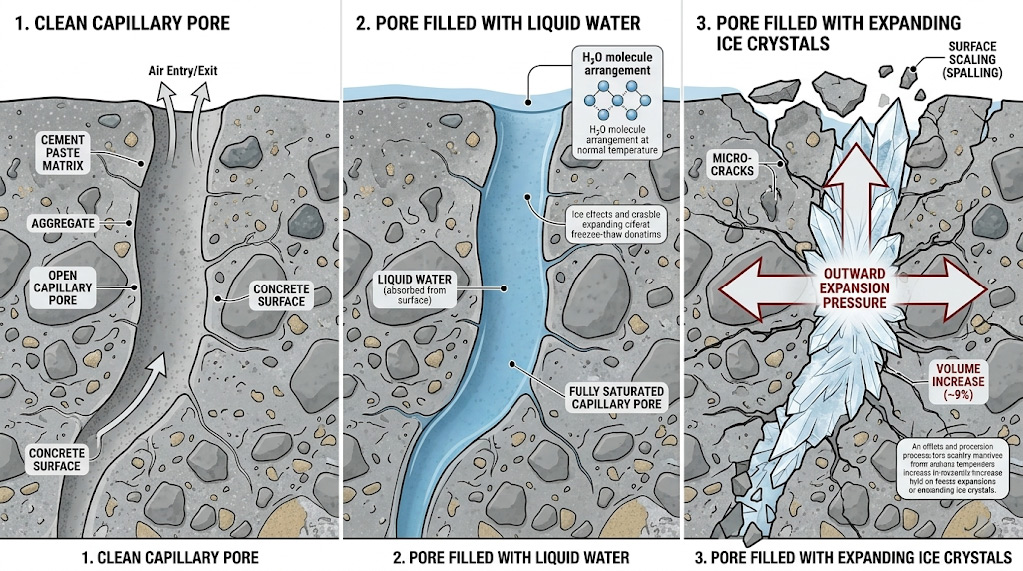
To understand how to prevent ice, you first have to understand why concrete is so vulnerable. Concrete is a porous material like a very hard, dense sponge. It is filled with microscopic capillaries.
When ice melts into water, it seeps into these pores. If that water refreezes (the “freeze-thaw cycle”), it expands by approximately 9%. This internal pressure creates “spalling,” which is the chipping, flaking, and pitting you see on older Toronto driveways. When you add harsh chemicals into the mix, you aren’t just melting ice; you’re often accelerating this physical destruction.
1. The Pre-Storm Strategy: Anti-Icing vs. De-Icing
The best way to prevent ice buildup is to stop the bond from forming in the first place. This is a technique known as Anti-Icing.
Most homeowners wait for the storm to finish, then go out and throw handfuls of salt on top of the ice. This is De-Icing, and it’s inefficient. By the time you de-ice, the snow has already been packed down by tires and footsteps, forming a hard ice-to-pavement bond.
Pro-Tip: Brining
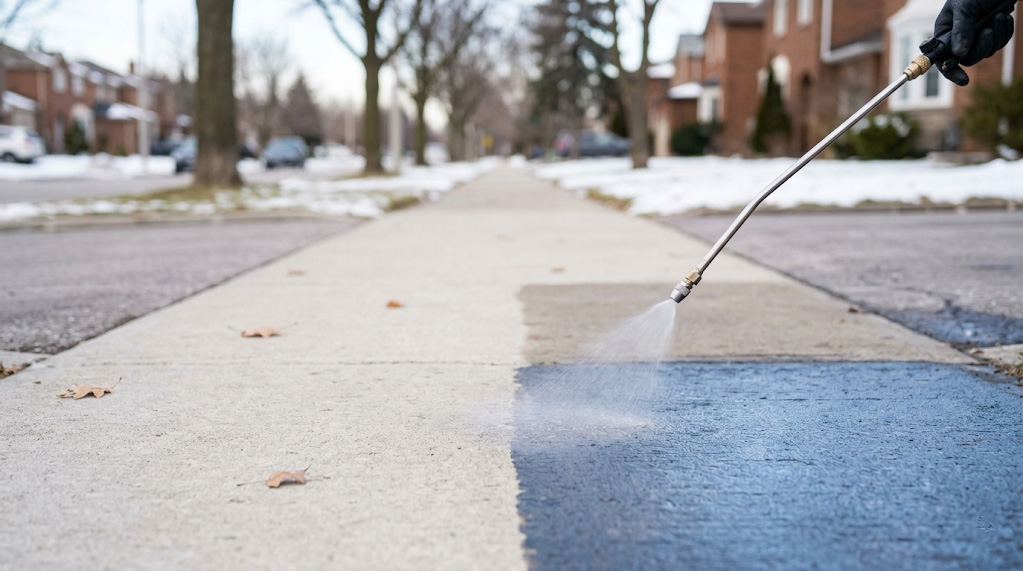
Before a predicted storm, applying a liquid brine (a mixture of water and salt or magnesium chloride) creates a barrier on the concrete. When the first snowflakes hit, they melt into the brine rather than sticking to the concrete. This makes the eventual snow removal much easier and prevents the formation of “black ice.”
2. Choosing the Right Melting Agent
Not all salt is created equal. If you want to protect your concrete, you must look at the chemical composition of your de-icer.
Avoid: Rock Salt (Sodium Chloride)
Rock salt is the most common and cheapest option, but it’s the hardest on concrete. It is highly corrosive to the rebar inside reinforced concrete and lowers the freezing point of water to only about -9°C. In a deep Toronto freeze, rock salt stops working, leaving you with a slushy mess that will refreeze and cause spalling.
Better: Magnesium Chloride
This is the “goldilocks” of de-icers. It is significantly less corrosive than rock salt and is much safer for the environment and pets. It works effectively down to -15°C, which covers most North York winter nights.

Best for Extreme Cold: Calcium Chloride
If the temperature drops to -25°C, calcium chloride is the heavy hitter. It is “exothermic,” meaning it actually releases heat as it dissolves. While more expensive, you use significantly less of it, which reduces the chemical footprint on your driveway.
3. The Power of Mechanical Removal
The single most effective way to prevent ice without chemicals is prompt and thorough snow removal.
When snow sits on a driveway, the weight of a car compresses it into an “ice-pack.” Once this happens, you are forced to use heavy chemicals or metal scrapers, and both of these damage concrete.
At JPS Property Solutions, our 8:00 AM Commuter Access Guarantee is designed specifically to prevent this. By clearing the snow before you drive over it, we eliminate the primary cause of residential ice buildup.
4. Addressing the “Windrow” Problem
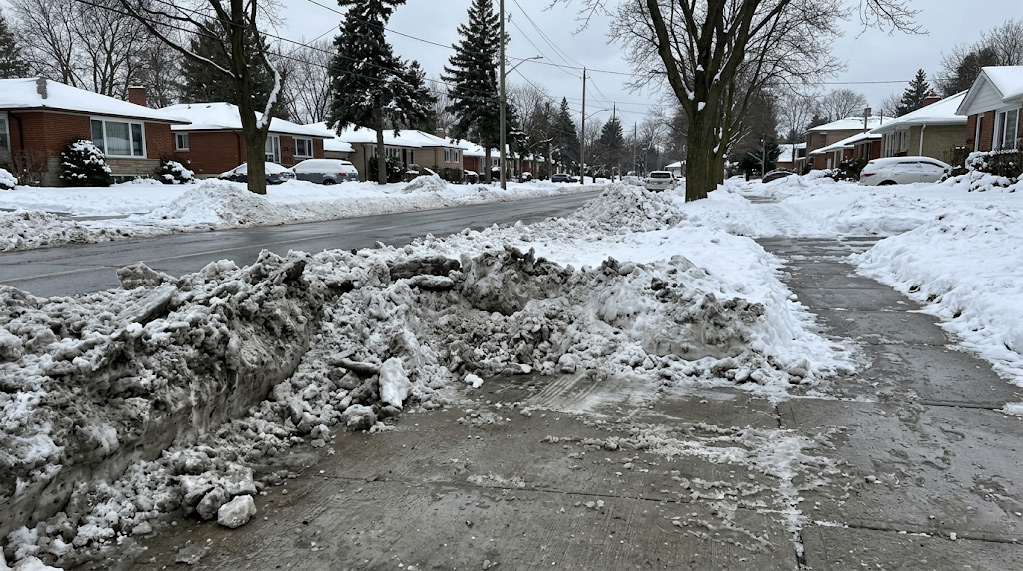
One of the biggest ice-creators in North York is the City of Toronto snow plow. As the plow passes, it leaves a heavy wall of wet, slushy snow at the end of your driveway: the Windrow.
If left for even an hour, this slush hardens into a block of ice that can take days to melt. A key part of a damage-free strategy is ensuring this windrow is cleared immediately. Our Estate Membership includes automatic City Plow Windrow Removal, ensuring that this heavy ice never has a chance to bond to your concrete.
5. Traction Over Chemical Melting
Sometimes, the goal shouldn’t be to melt every molecule of ice, but simply to make the surface safe.
- Sand: Provides excellent grit and does zero chemical damage to concrete.
- Birdseed: A sustainable alternative that provides traction and feeds the local birds.
- Pickle Juice: Some municipalities use a beet-juice or brine mix. While effective, it’s often more practical for commercial applications.
Summary of Concrete-Safe Ice Prevention
| Method | Safety Rating | Concrete Impact | Effectiveness |
| Prompt Shoveling | High | Zero Damage | 10/10 (If done early) |
| Magnesium Chloride | High | Low Corrosivity | 8/10 |
| Sand/Grit | High | Zero Damage | 7/10 (Traction only) |
| Liquid Brining | High | Minimal | 9/10 (Pre-storm) |
| Rock Salt | Low | High Damage | 5/10 (Fails in deep cold) |
Tired of fighting the ice yourself? Let the experts at JPS Property Solutions handle the North York winter for you. From our 8:00 AM Guarantee to our City Plow Windrow Removal, we keep your property perfect every season.
Get Your Free Snow Removal Quote →
Frequently Asked Questions (FAQ)
1. Does salt really ruin new concrete?
Yes. New concrete that is less than 2 years old is especially “green” and full of moisture. Using salt on new concrete can cause immediate scaling and surface failure. We recommend using only sand for traction on driveways that are less than two winters old.
2. What is the “5cm Trigger” and why does it matter for ice?
Most professional services, including JPS Property Solutions, operate on a 5cm trigger. This means we head out as soon as 5cm has fallen. This prevents the snow from becoming deep enough to pack down into ice, which is the best way to keep your driveway safe without over-salting.
3. Will vinegar melt ice on my driveway?
While vinegar lowers the freezing point of water slightly, it is an acid. Frequent use can actually etch the surface of your concrete, leading to a dull, rough finish. It is not an effective or safe solution for large areas like a driveway.
4. How do I prevent the “ice wall” left by the city plow?
The city plow is inevitable in North York. The only way to prevent it from turning into a permanent ice ridge is to clear it within 30 to 60 minutes of the plow passing. If you aren’t home,The Estate Membership covers this automatically so you don’t come home to an icy barricade.
5. Can I use a metal shovel on my concrete driveway?
You can, but you shouldn’t chip at the ice. Impacting the concrete with the corner of a metal blade can create small fractures where water will enter and freeze. A heavy-duty plastic shovel with a wear strip is much safer for the longevity of your concrete.